
统计大讲堂第315讲:Smoothed GMM Estimation of Spatial Quantile Autoregression
2026-09-30
Smoothed GMM Estimation of Spatial Quantile Autoregression
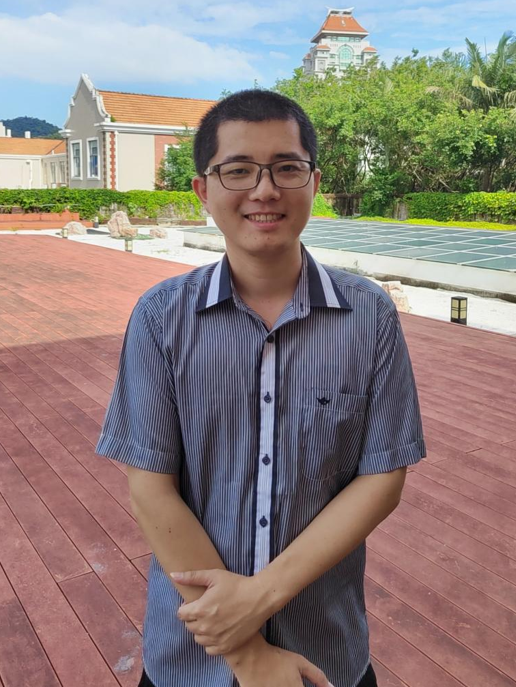
主讲人:许杏柏
许杏柏,厦门大学王亚南经济研究院、邹至庄经济研究院和经济学院长聘教授,博士生导师,厦门大学南强A类青年拔尖人才。2016年从俄亥俄州立大学获得经济学博士学位。主持国家自然科学基金青年项目一项、面上项目两项,以及负责重点项目子课题一项。主要研究领域为空间计量经济学、网络计量经济学、稳健估计、贝叶斯、面板数据分析以及混合模型。20多份研究成果发表在Journal of Econometrics, Econometric Theory, Journal of Business and Economic Statistics, Statistica Sinica等学术期刊上。所教授课程《高级计量经济学》被评为首批国家级本科一流课程之一,所参与教学改革项目获得2022年国家级教学成果奖二等奖、福建省教学成果奖特等奖。
1 报告信息
时间
2026年10月8日(周四)10:00
地点
中国人民大学中关村校区明德主楼1016会议室为线下会场;
中国人民大学通州校区经济学部楼215会议室同步设置观看点。
2 报告摘要
The spatial quantile autoregression (SQAR) model extends the classical spatial autoregression framework to capture quantile-specific spatial effects. However, existing estimation methods for SQAR model have two disadvantages. First, it only considers the linear moment conditions and ignores quadratic moment conditions, resulting in low estimation efficiency. Second, the computation is challenging as it involves discontinuous functions. To address these challenges, we propose a novel smoothed generalized method of moments (SGMM) estimator for the SQAR model. Specifically, we construct quadratic moment equations to improve estimation efficiency and introduce a kernel-based smoothing technique to overcome computational difficulties. Theoretically, we prove that the underlying data generating process exhibits weak spatial dependences by using a novel spatial functional dependence framework. Our developed framework facilitates theoretical analysis under flexible spatial dependence structures and is of independent theoretical interest. We further extend our method to accommodate dependent error terms with a banded covariance structure and enhance estimation accuracy for extreme quantiles. Extensive numerical studies and empirical applications demonstrate the superior performance and practical utility of our proposed method.
